Using AI to Build Your Corporate Housing Business: Practical Sales Development Lessons from CHPA Connect26
When Dwellworks Living proposed a session ‘on AI’ for the recent CHPA Connect26 event in Austin, we asked our serviced accommodations partners what kind of AI information they needed. The answer from these corporate housing operators was, “give us a session on how to streamline operational tasks and a session on how to build our business.”
We created a proposal for the business development session with a focus on staged introduction of AI tools, cases that made AI adoption relevant to corporate housing and straightforward steps that focused on organizing business knowledge and maximizing human talent, AI tools and strong process design for achievable results.
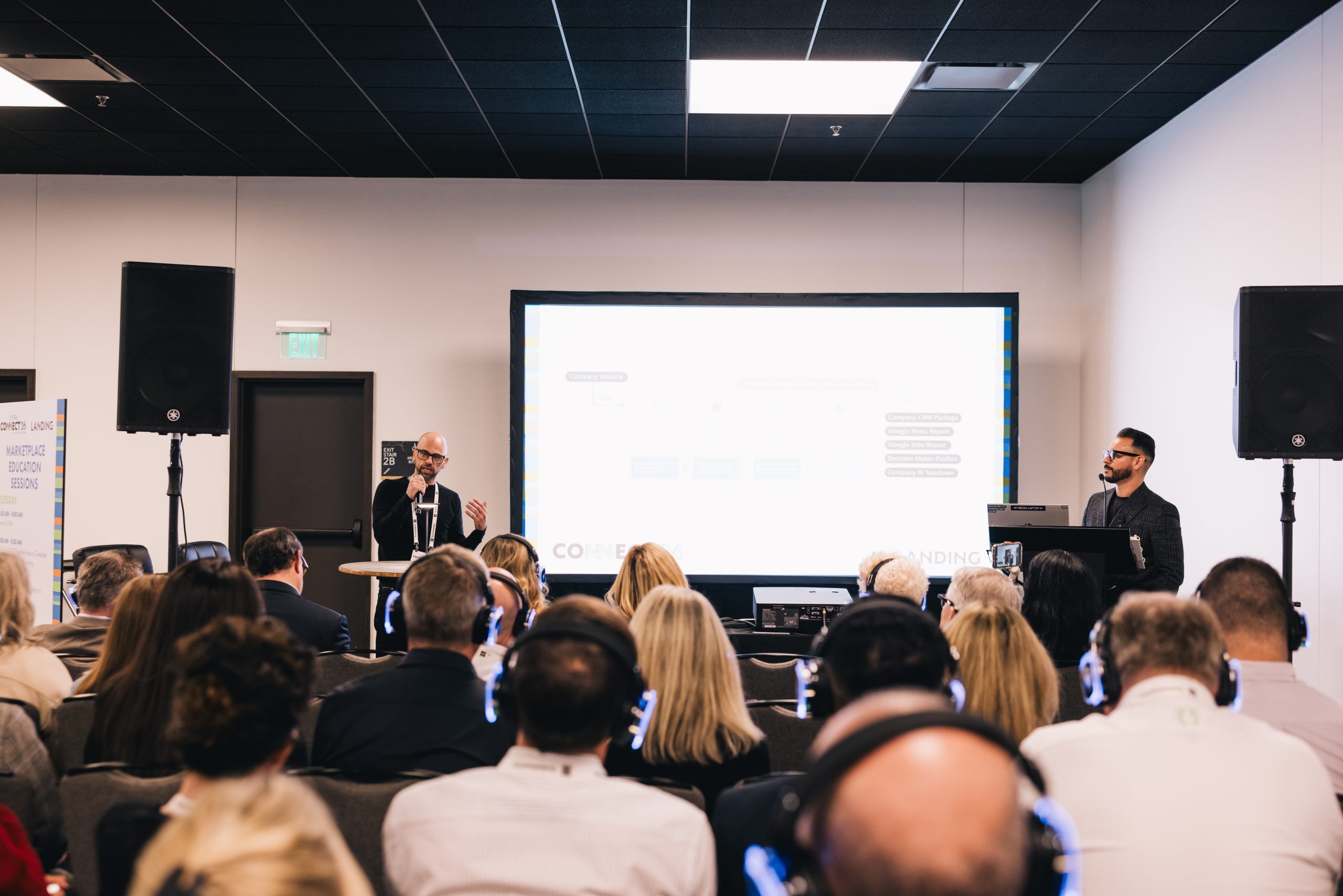
The session was developed in partnership with Handoff, a workflow and near shore talent resource that specializes in solutions and smarter workflows for the corporate housing industry. The formal name for the session was Practical Application of AI in Corporate Housing Sales: Using AI to Build Your Business with a presentation team that included Anthony Gonzalez, CEO and Jake Castro, VP, Automation AI at Handoff, who were introduced by Bob Rosing, CCHP, Executive Chairman at Dwellworks/Dwellworks Living and a CHPA Board member.
Why AI Matters Now
The furnished accommodations market is rapidly expanding, and operators and owners need tools to maximize their sales presence and opportunities. The session was among the most well-attended at CHPA Connect26 and strong attendance reflected a clear signal from CHPA members that operators are ready for practical guidance on using AI to support growth.
In this article, we’ve recapped the key ideas presented and how owner/operators of furnished accommodations can use AI to accelerate their business growth. When members ask, “What can I walk away with?,” we respond that AI is a tool to help operators compete in a more focused, efficient way. It’s not about the technology; it’s about accelerating performance and results.
Map Your Process First
Before deploying any AI tools, the first assignment any business owner/operator needs to tackle is ‘what manual tasks steal time every week?’ Inevitably those tasks are associated with key business operations like guest services, property management, vacancy and occupancy control, billing and administration and sales, marketing, and client account management.
Your team is your best resource for understanding where the flaws are in your process and to identifying what is or isn’t getting done, but with too much effort for limited return. The Handoff team summarized four critical steps to follow before introducing AI:
- List the ‘draining’ tasks
- Document the right steps
- Identify the repetitions
- Decide what tasks need to stay human
Human Expertise is Essential
The last point is an important one. It’s not just about ‘keeping a human in the loop’ to control risk. A service business depends on person-to-person engagement. AI can be used to automate reminders, to comb through data sets, to propose communication templates, but it will not build a closer relationship with guests, clients and partners. Highly skilled professionals do that and will do it better when they are less tied down by replicable tasks that are better performed through automated processes.
The first opportunity for the application of AI is to automate and accelerate good business practices so that people can be more productive. As Gonzalez commented, “You don’t automate chaos, you automate clarity.” For furnished accommodations operators, this reframes AI not as a technology decision, but as a discipline of process design.
Using Automation to Scale Beyond Founder Led Sales
For most mid-stage operators of corporate housing businesses, a compelling reason to improve the business development process is to pivot away from depending exclusively on founder-led sales.
Once a business is launched and operating, founders have other demands on their time but are also historically those with the greatest number of connections and knowledge and therefore those to whom the task of growing the business falls.
The assessment process noted above is ideal for tackling this challenge. Of course, clients and prospects want to connect with leadership (as well as other subject matter experts) during the sales cycle, but it’s not efficient for any business to have the founder/leader also managing the administration of sales.
Using the above guidance (list, document, identify,and decide), a business can review all the process steps associated with new business development and begin to identify and isolate the resources that could make the process more efficient.
The resources available to support specific capability categories include,
- AI for Sales Automation (managing calendars, tasks, meetings, and appointments)
- AI-assisted Research and Enrichment (learning about your prospects and how they align with your unique value proposition)
- Communications History (who has talked to whom and what was shared)
- Information Distribution (assuring whoever needs information gets it without having to dig through email correspondence)
- Workflow Automation for Follow-Up (automating reminders, actions agreed to, and next opportunity for personal engagement)
In order to accelerate your sales success, first create the waterfall from the perspective of your business needs and then present those ideas to AI resources like Claude, Gemini and Chat GPT/Copilot to review. Properly designed processes plus thoughtful prompts will yield AI responses and recommendations that align with and enable refinement by the business operator.
Start with a Drawing
While presenting at Connect26, Jake Castro was asked, “Where do you start?” Even leaders who run demanding and complicated businesses can be intimidated in the face of AI, especially since, as Castro notes, “Most of the early-stage generative AI messaging was all about taking people out of the process. That’s not a great option for people whose businesses depend on genuine human connection and confidence in their service.”
His answer? Start with a drawing. Create a roadmap using plain language. It doesn’t have to be perfect, but the internal team creating the map, with all the process steps that need to be included in a successful sale, will be far better at identifying the steps than AI will be. You are not after the generic, you’re after a process that may use some automation steps and pre-existing practices but ultimately should work to achieve customers for your particular brand and way of working.
Mapped processes make it easier to identify defects, repetitions, and moments where human judgment matters most. Those steps prepare your organization for AI-led sequencing, automation, and effective coordination between your various standalone information systems. That is what agentic AI is – the orchestration of unique AI agents to create a comprehensive solution.
The presenters shared a process map for what happens when a new pursuit is identified in an AI-supported environment. Thirty tabs open up, but machines do all the background work: establishing sequences, organizing information sharing and most of all recognizing where human judgment will be called on for making decisions based on expertise.
Is the Return Worth the Investment?
The investment in improved sales is not exclusively in AI tools, but in committing to thoughtful process design and being specific about your goals. With that guidance, the presenters shared that they have reduced their own sales call preparation time by 90%, while generating more calls, more closings and more time focused on connecting with the prospective client. These results are achieved over time, in stages and will depend on the time and technology investment each business owner is able to support.
Key Takeaways for Corporate Housing Operators
- Human judgment remains central to service led businesses
- AI is most effective when applied to clearly mapped and up-to-date processes
- Automation supports sales growth by reducing administrative drag
- Sales scalability does not require replacing people, but optimizing their strengths
What Are the Bigger Benefits to the CHPA Community?
All the sessions at CHPA Connect26 were deliberately designed with the membership in mind, whether to share core economic data, update on the effective use of booking platforms, brainstorm on solutions for group moves or get a head start on the application of AI for business success.
Dwellworks Living, Handoff and CHPA have made the presentation available in the conference app and here. Next steps are continuous engagement with CHPA leadership to explore how this session can be used as an educational resource for all members, including the development of templates and tools to help business operators to map their processes, engage with AI and build their sales.