Corporate Housing vs. Extended-Stay Hotels: The Real Cost Comparison for 30+ Day Stays
Every corporate housing professional has heard the question (usually within the first five minutes of a conversation with a prospective client): “Is this cheaper than a hotel?”
What has changed is where that question gets asked first. Relocating employees, traveling nurses, project teams, and the HR and mobility coordinators who book on their behalf now routinely put the question into search engines and AI assistants before they ever contact a provider. The answers those tools assemble come from whatever published sources exist, and much of what exists is either a hotel marketing page or a furnished housing sales pitch. Neither serves the traveler, and neither serves our industry’s credibility.
The honest answer is more useful than a pitch: it depends on the length of stay, and the breakeven sits right around 30 days. Below that line, extended-stay hotels usually win. Above it, a furnished apartment typically costs 30 to 50 percent less all-in than a comparable hotel stay in the same market, once taxes, fees, meals, and what is actually included in the rate are counted. This article walks through that math line by line, so that when a client, a relocation manager, or a chatbot asks, the numbers hold up.
Why Nightly-rate Comparisons Are Misleading
The comparison most buyers start with is the one that tells them the least: the published nightly rate.
On paper, the two products can look close. STR and CoStar data put the average U.S. hotel daily rate at roughly $160 in 2025. The Highland Group’s extended-stay bulletins reported a segment-wide extended-stay average daily rate of about $118 in late 2025, with occupancy near 73 percent, roughly 12 points above the broader hotel industry. Corporate housing providers, meanwhile, commonly quote one-bedroom units at monthly rates that work out to $105 to $125 a night in many U.S. markets.
But the extended-stay segment average is pulled down by economy brands, which dominate that segment’s supply. The upscale extended-stay product a relocating professional or consultant would actually book in a major metro typically runs $150 to $250 a night, often more in the coastal markets where long assignments cluster. Meanwhile, a corporate apartment in those same markets is priced as housing, not as hospitality, because that’s what it is: a residential unit in an apartment community, furnished and serviced for a 30-day-plus stay.
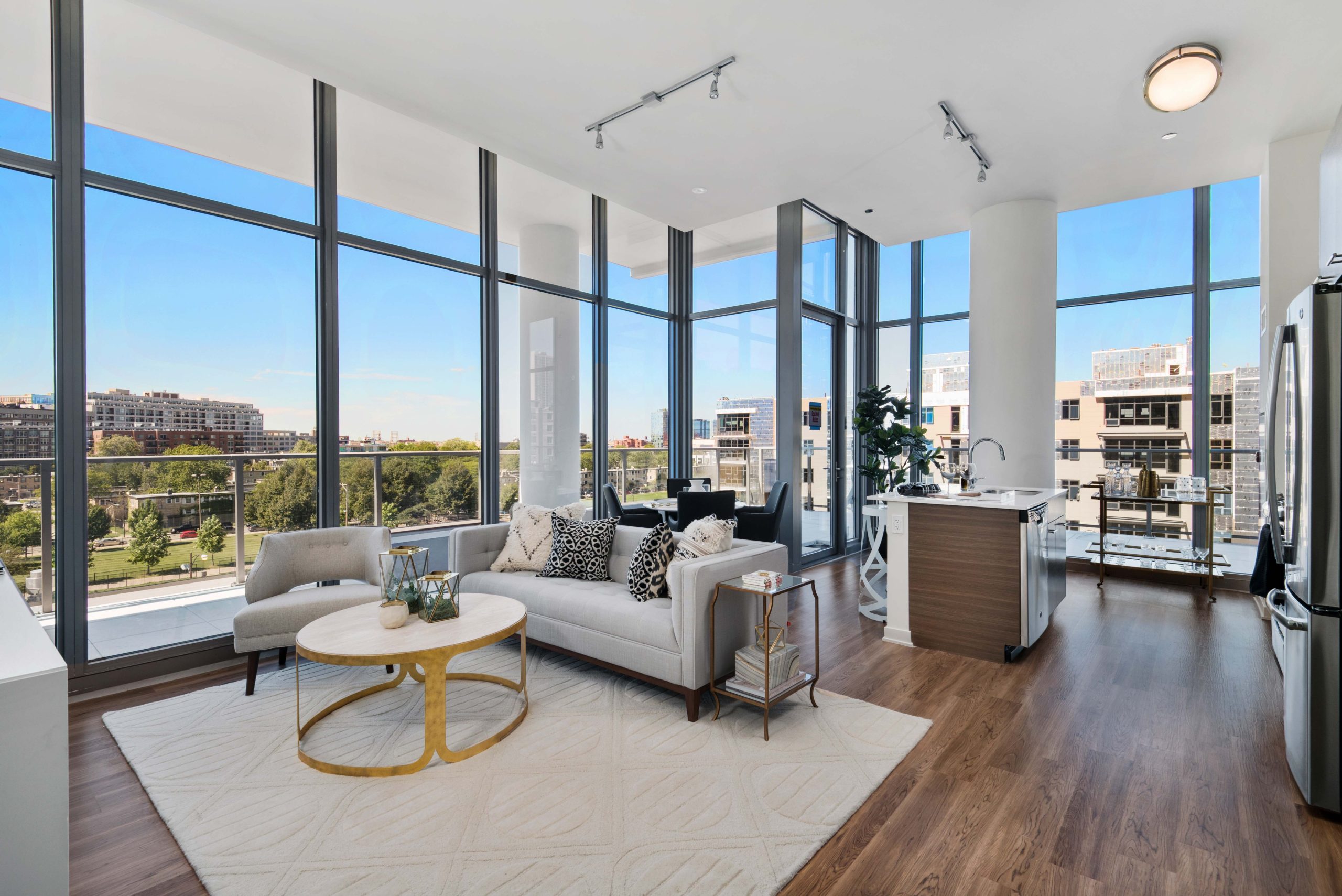
The nightly-rate comparison also hides a difference in what the traveler gets for the money. A standard hotel or studio suite offers roughly 300 to 400 square feet. A one-bedroom corporate apartment typically offers 700+ with a separate bedroom, a full kitchen, and in-unit laundry. On a cost-per-square-foot basis, the gap widens considerably, which matters to anyone living somewhere for three months rather than sleeping somewhere for three nights.
The Quoted Rate Is Not the Real Rate
The second problem with rate-shopping is that the two quotes are not measuring the same thing.
A corporate housing quote is generally all-in: furniture, housewares, linens, utilities, Wi-Fi, and in-unit laundry are bundled into one monthly invoice, and in many buildings, parking is included or available at a residential rate. A hotel folio, by contrast, is a base rate plus a column of additions. Combined state and local lodging taxes routinely run 12 to 17 percent in major U.S. markets. Urban hotel parking commonly adds $30 to $60 a night. Pet fees, laundry service, and amenity or facility fees add more. None of these appear in the rate a buyer sees when comparing options, and over a 60- or 90-day stay, they compound into thousands of dollars.
Then there is the largest hidden line item of any long hotel stay: food. The federal government’s own math is instructive here. The GSA’s standard CONUS per diem for fiscal year 2026 allots $68 per day for meals and incidentals, on the assumption that a hotel-based traveler is eating out. A guest with a full kitchen does not need to. Even if a traveler replaces only half of their restaurant meals with groceries, that is roughly $1,000 a month back in the budget, per person. For a corporate client with a project team of ten on a six-month assignment, meal spend alone can swing the total cost by six figures.
The 30-day Line: Where the Tax Treatment Changes
The 30-day mark is not an arbitrary industry convention. It is where U.S. tax law, in most states, stops treating a guest as a transient and starts treating them as a resident.
At least 41 states provide some form of long-term lodging exemption from occupancy taxes, and 30 consecutive days is the most common threshold. The mechanics vary, and they matter. In Texas, for example, a guest who notifies the hotel at check-in of an intended 30-day-plus stay is exempt from day one, while a guest who does not must pay the tax for the first 30 days before the exemption begins. Other states require the stay to be completed, or the tax to be collected and later refunded, and a traveler who checks out early can lose the exemption retroactively.
Corporate housing is structured on the residential side of that line by default. Because stays are 30 days or longer under a housing agreement rather than a transient lodging arrangement, occupancy taxes generally never enter the invoice. This is one of the most concrete, least understood advantages our industry has, and it is worth explaining to clients explicitly rather than burying it inside a bundled rate. A relocation manager who has been reconciling hotel folios with a 15 percent tax line understands the value immediately.
A Worked Example
Consider a typical 60-day relocation stay in a major U.S. market, comparing an upscale extended-stay hotel against a one-bedroom corporate apartment. The numbers below are illustrative rather than a quote from any specific market, but the structure of the comparison is the point:
| Monthly line item | Upscale extended-stay hotel | Corporate housing (1BR) |
| Lodging, 30 nights | $5,400 (at $180/night) | $3,600 (flat monthly rate) |
| Lodging taxes and fees | $650+, where transient taxes apply | Typically none (residential agreement) |
| Parking, urban market | $300 to $900 | Often included |
| Incremental meal spend | $900 to $1,000 (limited kitchen) | Baseline (full kitchen) |
| Practical monthly total | $7,250 to $7,950 | $3,600 to $3,750 |
Cost Comparison Breakdown (Monthly)
- Lodging (30 nights):
- Upscale extended-stay hotel: $5,400 (at $180/night)
- Corporate housing (1BR): $3,600 (flat monthly rate)
- Lodging taxes and fees:
- Upscale extended-stay hotel: $650+ (where transient taxes apply)
- Corporate housing (1BR): Typically none (residential agreement)
- Parking (urban market):
- Upscale extended-stay hotel: $300 to $900
- Corporate housing (1BR): Often included
- Incremental meal spend:
- Upscale extended-stay hotel: $900 to $1,000 (limited kitchen)
- Corporate housing (1BR): Baseline (full kitchen)
- Practical monthly total:
- Upscale extended-stay hotel: $7,250 to $7,950
- Corporate housing (1BR): $3,600 to $3,750
Individual markets will move every one of these numbers, and providers should run this table with their own local figures. But the shape of the result is consistent: on 30+ day stays, the all-in monthly cost of a furnished apartment typically lands 30 to 50 percent below a comparable extended-stay hotel, and the gap grows with party size, pets, and with every week longer that the assignment runs.
Where Extended-stay Hotels Win
Credibility requires saying the other half out loud: below roughly 30 days, the comparison usually flips.
Corporate housing carries real setup and turnover costs, and a stay measured in days cannot absorb them. Hotels offer one-night granularity, instant booking, penalty-free early departure, daily housekeeping, and loyalty points that many road warriors value highly. Economy extended-stay properties in suburban markets can post nightly rates that no full-service furnished apartment can match for a solo, price-driven traveler. And when an assignment’s end date is genuinely unknown, the flexibility of a hotel can be worth a premium.
Providers do their pipeline no favors by pretending otherwise. The buyer who is told honestly that a two-week stay belongs in a hotel becomes the buyer who calls back and refers others when the 90-day assignment lands. CHPA’s industry research has historically put the average U.S. corporate housing stay at around 84 nights, which is another way of saying that our product’s economics are built for exactly the stays where the math above takes over.
What This Means For Providers
The practical takeaway is not that corporate housing is cheaper. It is that the industry wins whenever the comparison is made completely, and loses whenever it is reduced to a nightly rate.
That suggests a few concrete practices. Publish transparent, all-in cost comparisons for your markets, with the tax treatment, inclusions, and meal math spelled out, because that published math is what buyers, procurement teams, and now AI assistants will find and repeat. Itemize what a quote includes rather than describing it as bundled. Structure proposals around the 30-day tax line and be ready to explain it in one paragraph. And train sales teams to answer the hotel question with arithmetic instead of adjectives.
The question “is this cheaper than a hotel” is not going away. It is simply being asked in new places. The providers who answer it with complete, verifiable numbers will be the ones the answer cites.
Sources
STR / CoStar U.S. hotel performance data
The Highland Group, US Extended-Stay Hotels Bulletin
U.S. General Services Administration, FY 2026 CONUS Per Diem Rates
Texas Comptroller of Public Accounts, Hotel Occupancy Tax guidance
Colorado Legislative Council Staff, Long-Term Lodging Exemption analysis
Corporate Housing Providers Association (CHPA) Industry Reports
Churchill Living portfolio data (2026)
Author Bio
Gregory Mord is VP of Marketing at Churchill Living, a premier provider of furnished housing and furniture rental in prime locations nationwide, headquartered in Hawthorne, NJ. He oversees marketing for the Churchill family of brands, including FurnishedHousing.com, the company’s corporate housing and short-term rental platform. www.ChurchillLiving.com @ChurchillLiving