Small Staff, Big Impact: Reflections from CHPA’s 2025 Small Staff Forum in Louisville
Alaitz Ruiz Arteagoitia is the Senior Content Strategist for Handoff, where he leads brand voice development, content-creation, and go-to-market messaging for both Handoff and its clients. With a background in media, business development, and audience-growth strategy, he brings a decade of experience shaping high-impact storytelling for multicultural and mission-driven organizations. Alaitz is fluent in English and Spanish and specializes in crafting content that connects across diverse communities.
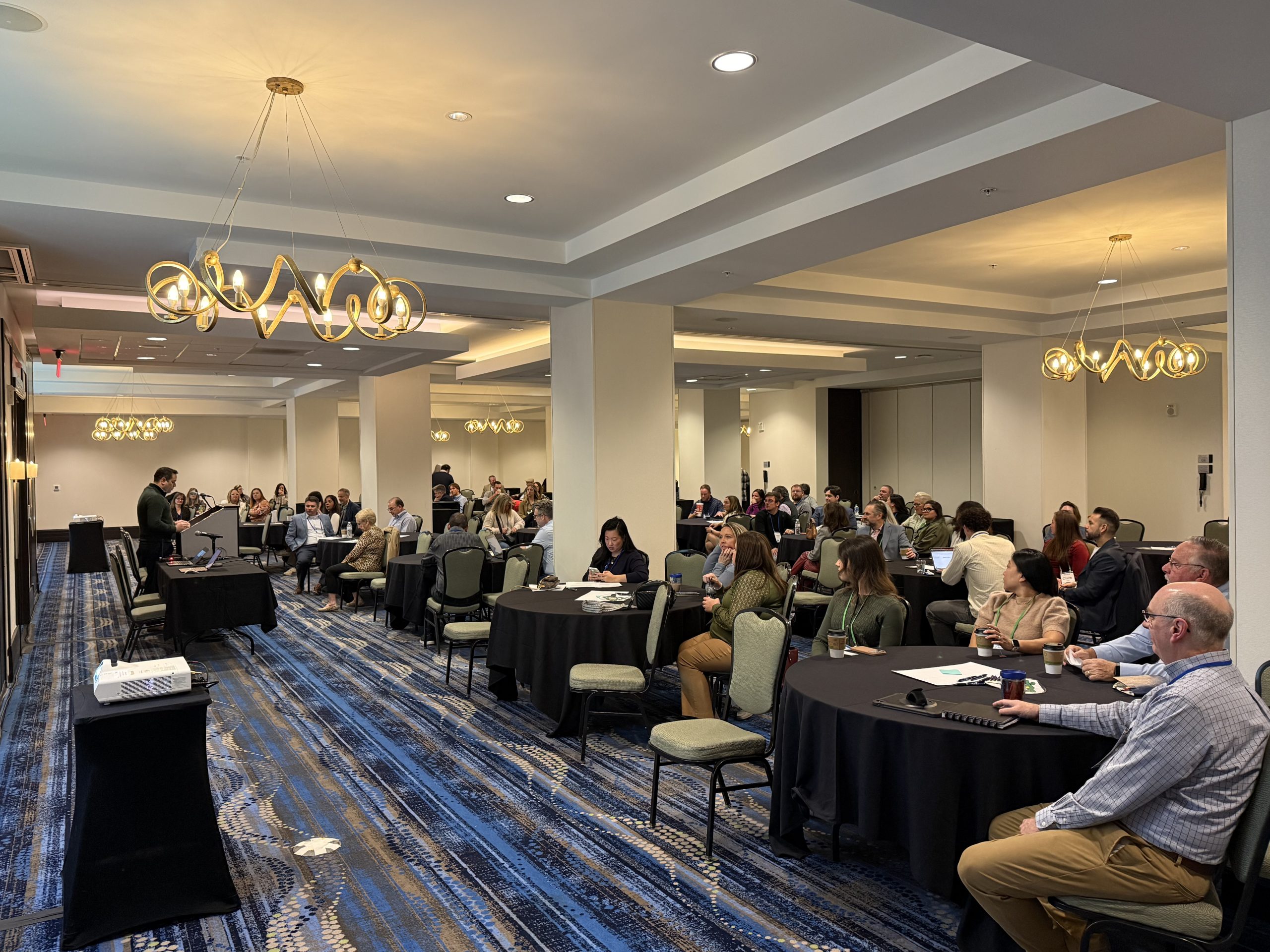
Corporate housing has always been powered by teams who do more than their size suggests: groups whose ability to execute, adapt, and serve clients well is central to the mobility ecosystem. That reality came into sharp focus at CHPA’s 2025 Small Staff Forum in Louisville, an event that felt less like a conference and more like a concentrated working session for the people who keep this industry moving.
For Jazmin and I, it was our first Small Staff Forum, and what we found was a community that surprised us in the best way. Anthony, who has attended several CHPA events over the years, saw that same spirit reflected back in every conversation.
A Culture of Sharing, Not Shielding
When Jazmin walked into her first session, she expected a little competitive energy (or standoffishness). Instead, she found the opposite. Conversations were open. People shared what was working and what wasn’t. Leaders swapped stories, tools, and strategies without hesitation. It didn’t feel like a room full of “competitors”; it felt like a community of practitioners invested in helping one another succeed.
There was a genuine sense that everyone had something to contribute. That made it surprisingly easy to approach people, ask questions, and have honest conversations about challenges they were navigating: staffing bandwidth, seasonality, owner expectations, sourcing logistics, and the operational juggling act that defines this industry.
For Jaz, who comes from sectors where information is often guarded, the openness alone signaled something powerful: this is an industry that grows by lifting each other up rather than closing ranks.
A Learning Experience From Every Angle
As someone new to the corporate housing space, I arrived prepared to absorb as much as possible. What I hadn’t expected was how quickly the industry’s operational depth would reveal itself.
Corporate housing may be “niche,” but nothing about it is simple. Every conversation, from roundtable sessions to hallway chat, touched on the layered work these teams handle daily: tight turnaround times, compliance demands, relationship management, and the constant need to balance cost, service quality, and speed. And all of this is often done by teams small enough to fit around a single table.
The Forum became a kind of accelerated immersion for me. Each session added another piece to the puzzle, but the most revealing moments came from talking directly with company leaders, owners, directors, operations heads, who were candid about what keeps their teams moving and what slows them down. Those conversations painted a picture of an industry filled with talented operators who carry both the strategic and tactical weight of their organizations.
It’s a lot. And yet, the energy in the room wasn’t strained, it was determined.
Anthony’s Take: Bandwidth Is the New Competitive Edge
Anthony spent much of the Forum doing what he does best—listening for patterns. From company to company, the stories were similar: brilliant teams with strong instincts and clear ideas for growth, all operating under the same constraint.
What stood out to him wasn’t a lack of capability or vision. It was the sheer volume of day-to-day work leaders were holding themselves. Tasks that are essential but time-consuming; tasks that pull attention away from strategy, partnerships, and improvements that would meaningfully move the business forward.
Anthony often says that growth rarely stalls because a business lacks potential—it stalls because the leader is buried under responsibilities that prevent them from acting on that potential. The Small Staff Forum reinforced that belief. The industry’s biggest bottleneck isn’t skill or creativity; it’s bandwidth.
Still, his perspective wasn’t pessimistic. If anything, he came away from Louisville more optimistic about the industry’s trajectory. The ideas are there. The leadership talent is there. The opportunity is in creating space to let those ideas become action.
Where Technology Fits, And Where It Doesn’t
Both Jazmin and I walked away aligned on one thing: the next decade of corporate housing will be shaped not just by people, but by processes and tools that give those people more room to succeed.
This wasn’t a conversation about replacing staff with software. Far from it. What we heard repeatedly, from companies of all sizes, was that the operational load keeps rising, while teams stay the same size or in some cases shrink. Technology, automation, and workflow improvements aren’t replacements for people; they’re ways to protect them from burning out, and ways to keep the business moving when demand rises faster than headcount.
Yet adoption varies widely across the industry. Some teams are already exploring automation and digitization. Others are still relying on processes that have worked for years but may not scale with the level of complexity they’re facing now. Jaz put it succinctly: “This industry has the heart, the community, and the knowledge. Now it’s about giving themselves the tools to match the pace of their own growth.”
Conversations That Will Carry Into 2026
Across all three of our perspectives, one thing was clear: the most valuable part of the Forum wasn’t just the sessions, it was the conversations happening in between them.
We spoke with leaders who have been in the industry for decades and with teams who were attending their first CHPA event. We heard about what’s working: strong client relationships, operational grit, team versatility, and an unwavering commitment to service. And we heard about what’s becoming more difficult: scaling without losing quality, managing workload swings, maintaining responsiveness, and keeping up with evolving guest expectations.
The honesty of those conversations, direct, unguarded, collaborative, was one of the Forum’s greatest strengths. You could feel the collective desire to make things better, smarter, and more sustainable.
A Forum That Delivered More Than We Expected
Louisville gave me a clearer picture of the corporate housing industry than months of reading could have. It gave us context for the work these teams do every day, and a new appreciation for the operators who keep this industry moving, often quietly, often behind the scenes, but always with excellence.
Most importantly, it gave us a shared understanding of where the industry is heading: toward tighter collaboration, more intentional structure, and tools that help small teams continue delivering big results.
We left feeling grateful for the conversations, impressed by the resilience and creativity of the teams we met, and excited about what this industry is building toward.
If the Small Staff Forum is any indication, the next chapter of corporate housing will be written by the same people who gathered in that room: leaders who care deeply, work tirelessly, and show up fully for their teams, clients, and communities.
And from where we stood in Louisville, that future looks promising.